 admin
admin 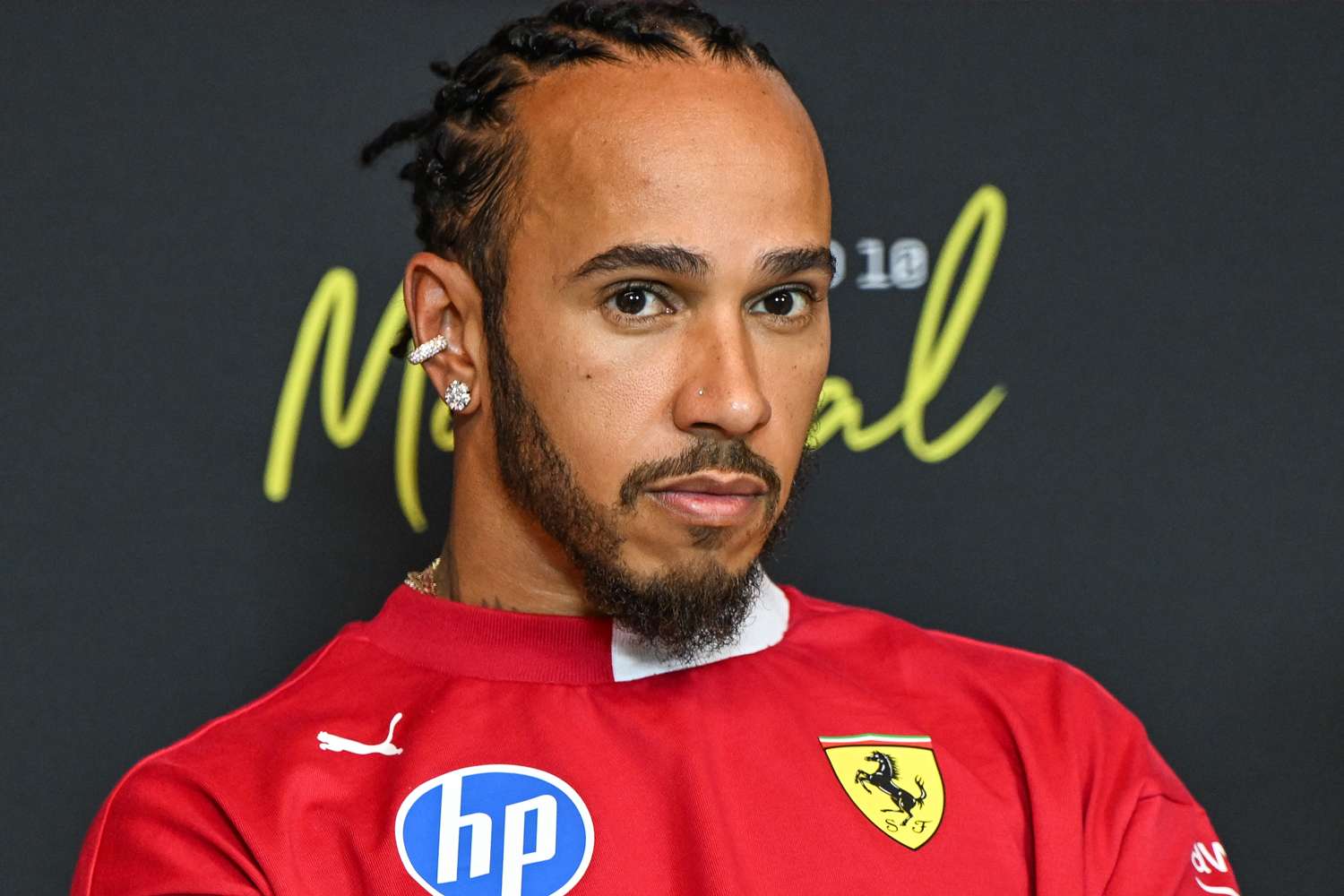
Lewis Hamilton moving to Ferrari is one of the biggest topics in modern Formula One. ‘The dream scenario’ was seven-time world champion Hamilton finishing his career at Ferrari in the iconic scarlet red. But beyond his glamour emotion, there is always another side to the coin: there is no guarantee of success at Ferrari, and there are more than enough rational reasons why even a driver of Hamilton’s caliber could have a tough time there.
In this post, we shall try to unpack the possible scenarios that could justify the challenges Hamilton faces at Ferrari.
Ferrari’s Car Concept Is Not in Alignment with His Driving Style.
Hamilton’s particular skill set has always been comfortable with what Mercedes has engineered—cars that provided great high-speed stability, strong rear-end grip, and excellent performance under braking. But Ferrari cars in the last several years have been a lot more temperamental. Their cars suffer from “snappiness,” which is the sudden loss of rear downforce. And they suffer with inconsistent race pace because of tire degradation.
Fitting oneself to Ferrari’s style is more than possible, but it is a tedious process. Hamilton has had a wheel in his hand from the age of 40 and has driven a race engineered for him for 20 years.
The knees buckle while shifting those impulses mid-career and easing into an automobile, which strengths don’t come easily to his driving style, and should contribute to a slackened pace and atypical mistakes.
Age and the Physical Demands of F1
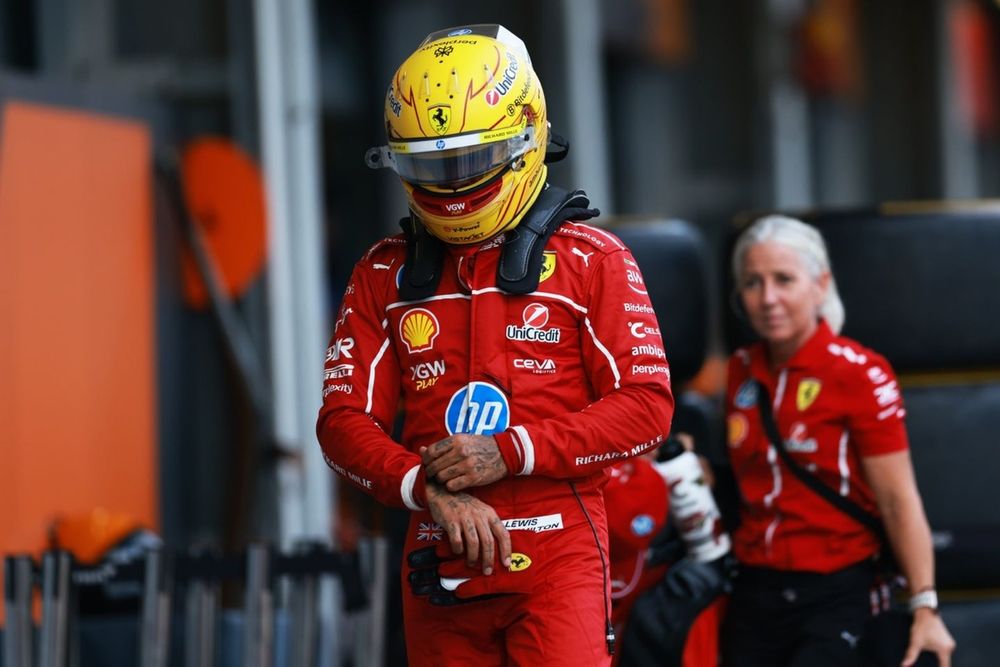
Even the greatest athletes cannot outrun time. The combination of sustaining a fully erect body while neck-deep in g-forces, split-second reflexes, and racing cognitive processing, which fuses in a duration of around 2 hours, is the holy grail of total Formula 1 fitness. Hamilton is in great shape, but 40s is a barrier. Age does dictate the onset of distinction compared to a younger rival.
It definitely does not mean that there is a sudden ‘Hamilton slowdown,’ but the ability to maintain a constant nimble output of foggy ‘type’ in a car that demands ceaseless aggressive attacking might be, well, aggressive attacking might be a bit more draining. In close-call instances of wheel-to-wheel and last-lap duels, those tenths of a second might just be the difference.
Ferrari’s History of Strategic and Operational Errors
If there’s a single Achilles’ heel Ferrari fans love to complain about, it’s their race day strategy and operational decision-making. Over the last decade, for some inconceivable reason, the Scuderia Ferrari has gained a track record of fundamental mistakes that make people wonder how much thought goes into such pit stop calls, incorrect tires, or any other decisions that show absolutely no understanding of the conditions or any other context of the race.
A much annoyed Hamilton, who has been used to sharp, brilliant strategy and has been making decisions for summer Ferrari estimations, is stale to inaction from his pit wall.
Such blunders can be referred to as demoralizing, and even the best driver can’t compensate for poor decisions.
Internal Team Dynamics and Rivalries
The younger Charles Leclerc is the face of Ferrari, and as such, Hamilton is expected to work with the younger driver. Ferrari, with its ample resources, can prioritize either driver. Leclerc can be given ample primary tactical focus. This drives the point that Hamilton would rather concentrate on driving performance as opposed to spending valuable time on dealing with off-track political maneuvers
No driver is liked better than Hamilton in the Ferrari. He has the advantage of weathering rivalries in the team and is expected to extend the same courtesy to Rosberg. The reputation that precedes the team does suggest that Hamilton would love to take on the passionate fanbase that the team does boast of.
The Weight of Ferrari Expectations
The red color the Ferrari embodies is, to any driver, magnificent. The status, however, comes with the condition that the driver in question is capable of excellent performance. Heavily scrutinized, Hamilton does not have the lightest task. He must be the one, in particular, to change the finals of the championship.
What happens if there is not a single race to meet the expectations? What happens to the mental well-being of a person with Hamilton’s personal perfectionist strategy? Especially with the immense amount of press and fans swarming the team at the time.
Ferrari works with less patience than Mercedes—it is an unrelenting stew that has no tolerance for anything other than immediate results.
Ferrari’s Competitiveness
Ferrari has not won a driver’s championship since 2007. There has been some progress over recent years, but it’s been a sustained lack of consistency. If Hamilton ends up with a car that’s capable of taking wins but not a title, he’s going to get annoyed. For someone like him, being a multiple-time world champion, fighting for podiums or fourths is a bit insulting.
Hamilton’s move to Ferrari features a lot of romance and symbolism, which will add to his legacy. But mastering Ferrari is not easy. The age of the car, the car’s particularities, tactical blunders, internal rivalries, and a decade of inconsistent performance mean there is a strong case to be made for why Lewis Hamilton would be struggling in Ferrari red.
In F1, storylines change in the blink of an eye. Just as it was for Michael Schumacher, who at first struggled with the team and then went on to build a dynasty for Ferrari, so too with Hamilton, he may break the mold with his unyielding willpower.
Struggling does not always equate to failing—it could just be the beginning of a comeback.